
“`html
From investment Banking to Consulting: A Comprehensive Guide
From Investment Banking to Consulting: A Comprehensive Guide
The world of finance offers a plethora of career paths, each with its own unique challenges and rewards. Two prominent fields that often attract ambitious professionals are investment banking and management consulting. While both involve high-stakes decision-making and require a sharp analytical mind, they differ significantly in their day-to-day activities, focus, and long-term career trajectory. This article delves into the nuances of each field, exploring the reasons why investment bankers might consider transitioning to consulting, the challenges involved, and the strategies for a successful switch.
Understanding Investment Banking
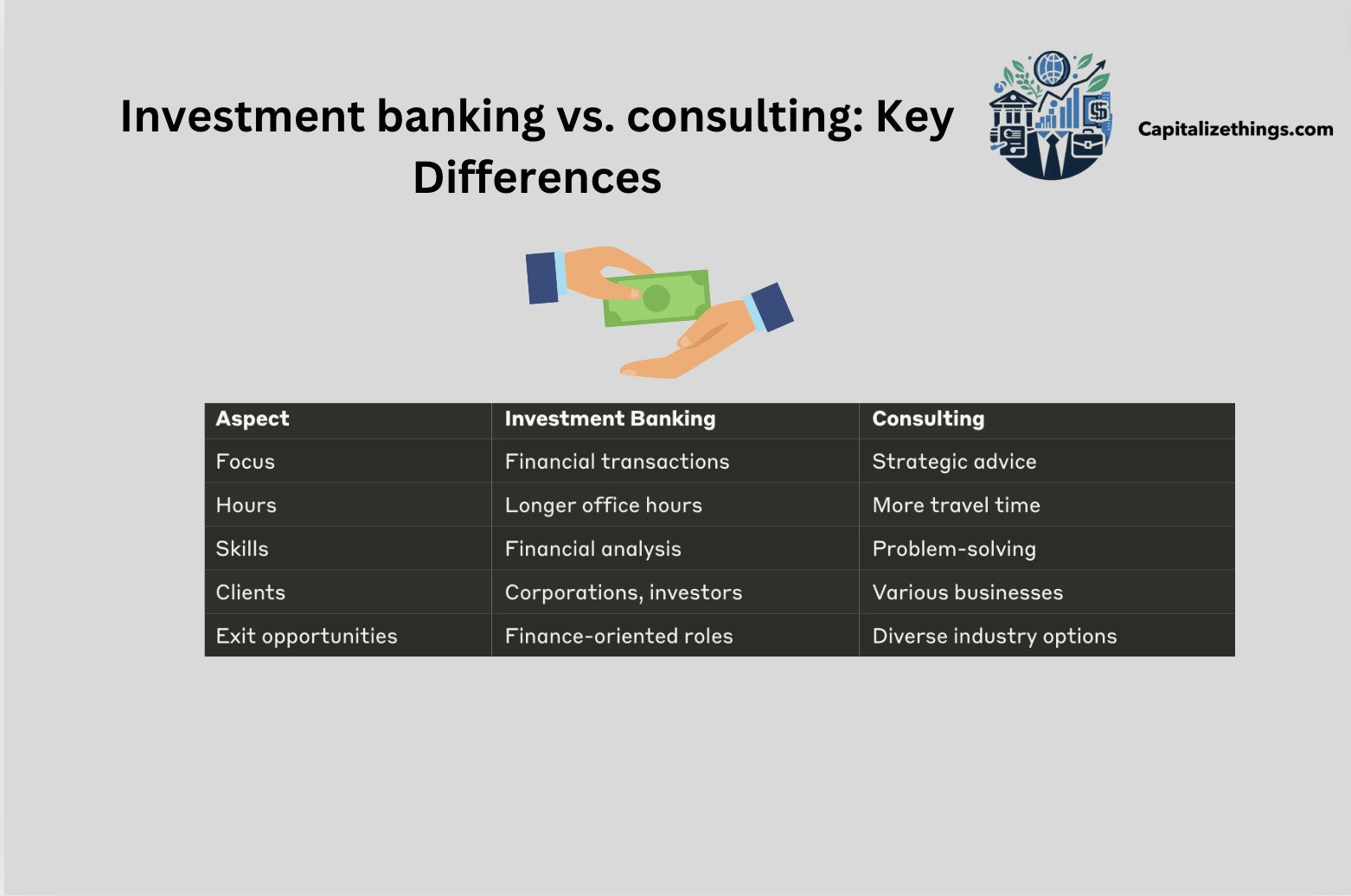
Investment banking is a demanding but potentially lucrative field that primarily focuses on raising capital for corporations, advising on mergers and acquisitions (M&A), and facilitating other financial transactions. Investment bankers act as intermediaries between companies and investors, helping businesses access funds needed for growth and expansion. Their work often involves complex financial modeling, due diligence, and deal negotiation.
Key Responsibilities of Investment Bankers:
Financial Modeling and Valuation
Deal Structuring and Execution
Client Relationship Management
Market Research and Analysis
Due Diligence
The Allure of Investment Banking:
High Compensation
Exposure to Senior Management
Fast-Paced and Challenging Work
Development of Strong Financial Skills
The Drawbacks of Investment Banking:
Long and Inconsistent Hours
Intense Pressure and Stress
Limited Work-Life Balance
Highly Competitive Environment
Steep Learning Curve
Understanding Management Consulting
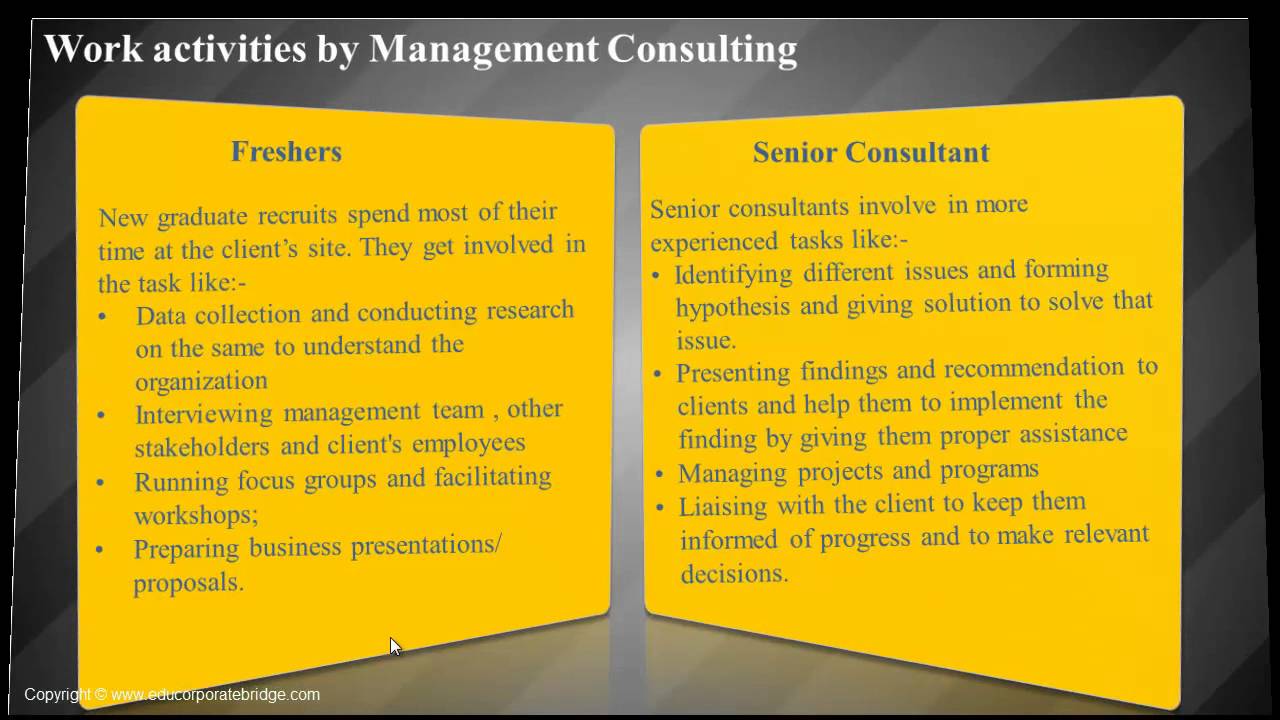
Management consulting, on the other hand, focuses on providing advisory services to businesses on a wide range of strategic, operational, and technological issues. Consultants work with clients across various industries, helping them identify problems, develop solutions, and implement changes to improve performance. Their work often involves data analysis, problem-solving, and project management.
Key Responsibilities of Management Consultants:
Problem Solving and Analysis
Strategic Planning and Development
Data Analysis and Research
Project Management
Client Communication and Presentation
The Allure of Management Consulting:
Variety of Projects and Industries
Intellectual Stimulation
Development of Broad Business Skills
Travel Opportunities
Better Work-Life Balance (Compared to IB)
The Drawbacks of Management Consulting:
Travel Requirements
Project-Based Work (Can Lack Long-Term Stability)
Pressure to Deliver Results
Competitive Environment
Potentially Slower Career Progression (Compared to IB Initially)
Why Investment Bankers Consider Transitioning to Consulting
While investment banking offers a challenging and rewarding career path, many bankers eventually consider transitioning to management consulting for various reasons:
Better Work-Life Balance: The notoriously long and unpredictable hours in investment banking often lead to burnout. Consulting, while still demanding, generally offers a better work-life balance.
Broader Exposure to Industries and Business Problems: Investment bankers typically specialize in a specific industry or type of transaction. Consulting provides exposure to a wider range of industries and business challenges.
Development of Broader Skill Set: While investment banking hones financial skills, consulting develops a broader skill set, including problem-solving, strategic thinking, and project management.
More Intellectual Stimulation: Consulting projects often involve complex problem-solving and strategic analysis, which can be more intellectually stimulating for some than the deal-driven nature of banking.
Long-Term Career Prospects: While investment banking offers high compensation in the short term, consulting can offer more diverse long-term career prospects, including opportunities to move into executive roles at client companies.
Challenges of Transitioning from Investment Banking to Consulting
While the transition from investment banking to consulting can be appealing, it’s not without its challenges:
Salary Adjustment: Investment bankers often take a pay cut when transitioning to consulting, especially in the initial years.
Different Skill Set: While some skills are transferable, consultants require a different skill set than bankers, including strong problem-solving, communication, and presentation skills.
Learning Curve: Bankers need to learn the methodologies and frameworks used in consulting, as well as adapt to a different work culture.
Competition: The consulting industry is also highly competitive, and bankers need to demonstrate their value and stand out from other candidates.
Perception of “Exit”: Some in the finance world may view the move to consulting as an “exit” from finance, although this perception is changing.
Strategies for a Successful Transition
To successfully transition from investment banking to consulting, bankers should consider the following strategies:
Networking: Network with consultants and attend industry events to learn more about the field and build connections.
Skill Development: Focus on developing the skills required for consulting, such as problem-solving, communication, and presentation skills. Consider taking courses or workshops to enhance these skills.
Tailoring Your Resume and Cover Letter: Highlight your transferable skills and experience in your resume and cover letter, emphasizing your analytical abilities, problem-solving skills, and client management experience.
Preparing for Case Interviews: Case interviews are a crucial part of the consulting recruitment process. Practice case studies and develop your problem-solving framework.
Demonstrating Your Motivation: Clearly articulate your reasons for wanting to transition to consulting and demonstrate your understanding of the industry.
Leveraging Your Banking Experience: Highlight how your experience in finance and deal-making can be valuable in a consulting role. For example, your financial modeling skills or industry knowledge.
Targeting Specific Consulting Firms: Some consulting firms specialize in financial services, which can be a good fit for bankers looking to leverage their existing expertise.
Be Prepared for a Salary Adjustment: Understand that you may need to take a pay cut initially, but focus on the long-term career prospects and the potential for future earnings growth.
Conclusion
The transition from investment banking to management consulting can be a rewarding career move for those seeking a better work-life balance, broader exposure to industries, and the development of a wider range of skills. While the transition presents certain challenges, careful planning, skill development, and effective networking can significantly increase the chances of success. By understanding the nuances of both fields and strategically positioning themselves, investment bankers can successfully navigate the transition to consulting and embark on a fulfilling new career path.
“`


:max_bytes(150000):strip_icc()/sweepaccount.asp-Final-e0b16e87c6be4879a9376eec7787c292.png?resize=200,135&ssl=1 "Lincoln Investment Sweep Program: An Overview")
