
From investment Banking to Management Consulting: A Comprehensive Guide
The career paths of investment banking and management consulting are often considered prestigious and highly sought-after, attracting top talent from universities worldwide. While both professions involve advising clients on strategic decisions, they differ significantly in their focus, work style, and required skill sets. This article provides a comprehensive overview of the key distinctions between investment banking and management consulting, exploring their respective roles, responsibilities, career progression, and the reasons why individuals might choose one over the other.
Investment Banking: The Realm of Financial Transactions
Investment banking is primarily concerned with raising capital for companies and facilitating mergers and acquisitions (M&A). Investment bankers act as intermediaries between companies and investors, helping businesses access funds through debt or equity offerings. They also advise clients on buying or selling businesses, structuring deals, and negotiating terms.
# Core Functions of Investment Banking
Underwriting: Investment banks underwrite new securities, meaning they purchase the securities from the issuer and resell them to the public. This process involves due diligence, valuation, and pricing of the securities.
# Skills and Qualities of Investment Bankers
Successful investment bankers typically possess a strong financial acumen, excellent analytical skills, and the ability to work long hours under pressure. They must be detail-oriented, possess strong communication and interpersonal skills, and be comfortable working with complex financial models.

# Career Path in Investment Banking
The typical career path in investment banking starts with an analyst role, followed by associate, vice president, director, and managing director. The pace of advancement can be rapid, but the work is demanding, often requiring long hours and extensive travel.
Management Consulting: Solving Business Problems
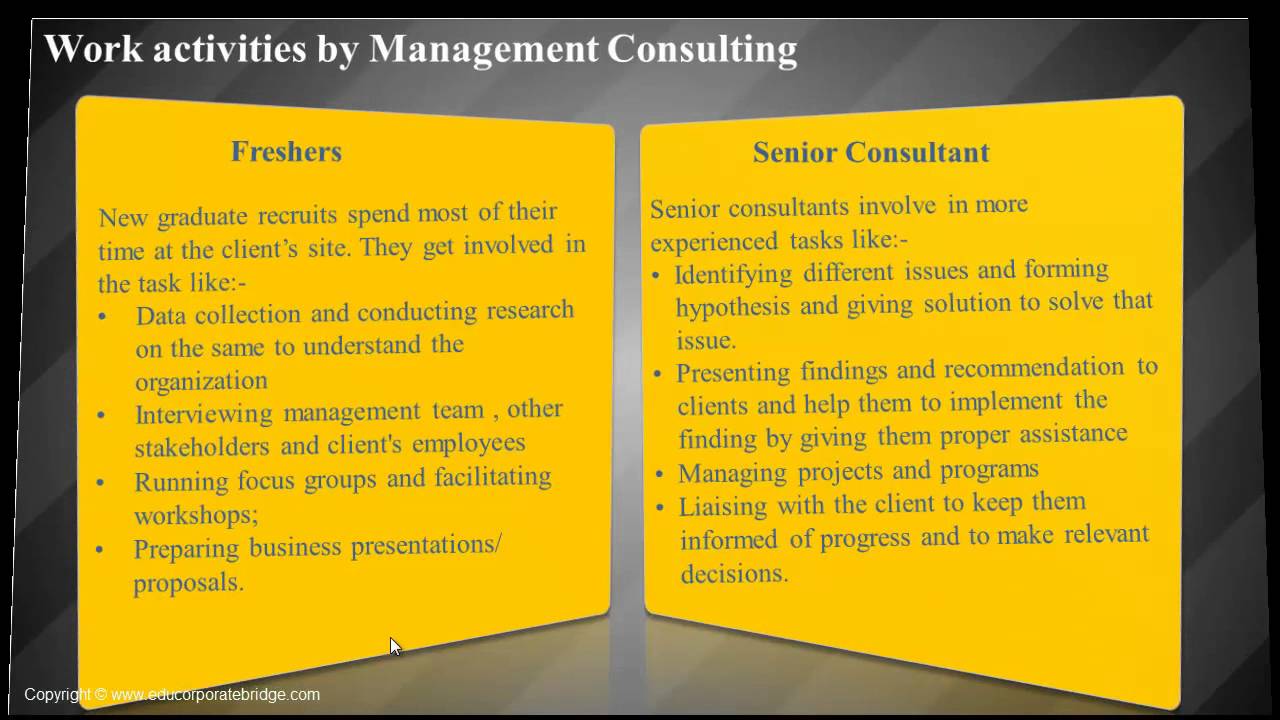
Management consulting focuses on providing advisory services to businesses on a wide range of strategic and operational issues. Management consultants work with clients across various industries, helping them identify challenges, develop solutions, and implement changes to improve performance.
# Core Functions of Management Consulting
Strategy Consulting: This involves advising clients on developing long-term strategies, entering new markets, and optimizing their business models.
# Skills and Qualities of Management Consultants
Management consultants need strong analytical and problem-solving skills, excellent communication and presentation abilities, and the capacity to work effectively in teams. They must be adaptable, creative, and comfortable working with clients from diverse backgrounds.
# Career Path in Management Consulting
The typical career path in management consulting starts with an analyst or consultant role, followed by senior consultant, engagement manager, associate partner, and partner. The progression is based on performance and experience.
Key Differences Between Investment Banking and Management Consulting
While both professions are intellectually stimulating and offer high earning potential, they differ significantly in several aspects:
# Focus
Investment banking primarily focuses on financial transactions, while management consulting addresses a broader range of business problems.
# Work Style
Investment banking is often characterized by intense, deal-driven work, with long hours and tight deadlines. Management consulting projects can also be demanding, but the work is often more project-based and involves more client interaction.
# Skill Set
Investment bankers need strong financial modeling and valuation skills, while management consultants require broader analytical, problem-solving, and communication skills.
# Client Interaction
Investment bankers primarily interact with senior executives and investors, while management consultants work with a wider range of client personnel, from C-level executives to operational staff.
# Impact
Investment bankers have a direct impact on financial transactions, while management consultants influence business decisions and operational improvements.
Choosing the Right Path
The decision to pursue a career in investment banking or management consulting depends on individual interests, skills, and career goals.
# Reasons to Choose Investment Banking
Interest in finance and financial markets
# Reasons to Choose Management Consulting
Interest in solving a wide range of business problems
Making the Transition: From Investment Banking to Management Consulting
While the two fields are distinct, it is possible to transition from investment banking to management consulting. The financial acumen and analytical skills honed in banking are highly transferable. However, bankers looking to make the switch should focus on developing their broader business problem-solving skills, their communication and presentation skills, and their ability to work effectively in teams. Highlighting any experience with strategic analysis or operational improvements will also be beneficial.
# How to Prepare for the Transition
Networking: Connect with management consultants and learn about their experiences.
Conclusion
Both investment banking and management consulting offer challenging and rewarding career paths. While investment banking focuses on financial transactions and requires strong financial skills, management consulting addresses a broader range of business problems and demands strong analytical and problem-solving abilities. The best choice for an individual depends on their personal interests, skills, and long-term career aspirations. By understanding the key differences between these two professions, aspiring professionals can make informed decisions about their career paths and pursue the field that best aligns with their goals.


:max_bytes(150000):strip_icc()/sweepaccount.asp-Final-e0b16e87c6be4879a9376eec7787c292.png?resize=200,135&ssl=1 "Lincoln Investment Sweep Program: An Overview")
