:max_bytes(150000):strip_icc()/dotdash-what-are-major-differences-between-investment-banking-and-private-equity-Final-36b2c17dd9c447278b790d76f7c66b31.jpg?ssl=1 "Investment Management Vs. Private Equity: A Comparative Overview")
investment Management vs. Private Equity: A Deep Dive
The world of finance offers a plethora of avenues for individuals and institutions to grow their capital. Two prominent, yet distinct, approaches are investment management and private equity. While both aim to generate returns, they differ significantly in their strategies, target assets, time horizons, and risk profiles. This article delves into the nuances of each, highlighting their key characteristics, advantages, and disadvantages.
Investment Management: Navigating Public Markets
Investment management, also known as asset management, involves managing investments on behalf of individuals, institutions, or funds. These investments typically focus on publicly traded securities like stocks, bonds, and other financial instruments readily available on exchanges. Investment managers act as fiduciaries, entrusted with the responsibility of making investment decisions aligned with their clients’ financial goals, risk tolerance, and investment horizon.
:max_bytes(150000):strip_icc()/dotdash-what-are-major-differences-between-investment-banking-and-private-equity-Final-36b2c17dd9c447278b790d76f7c66b31.jpg "image.title")
Strategies and Approaches
Investment managers employ a variety of strategies, broadly categorized as active or passive.
# Active Management
Active management involves attempting to outperform benchmark indices by carefully selecting securities believed to be undervalued or poised for growth. Managers conduct in-depth research, analyze financial statements, and employ various valuation techniques to identify promising investment opportunities. This approach requires significant expertise, research resources, and market timing skills.
# Passive Management
Passive management, conversely, aims to replicate the performance of a specific benchmark index, such as the S&P 500. This strategy involves constructing a portfolio that mirrors the index’s composition, minimizing trading activity and associated costs. Passive management is often favored for its lower expense ratios and its historical track record of matching, if not exceeding, the performance of many actively managed funds over the long term.
Investment Vehicles
Investment managers utilize various vehicles to manage investments, including:
# Mutual Funds
Mutual funds pool money from multiple investors to invest in a diversified portfolio of securities. They are professionally managed and offer investors access to a wide range of asset classes.
# Exchange-Traded Funds (ETFs)
ETFs are similar to mutual funds but trade on stock exchanges like individual stocks. They typically track a specific index or sector and offer greater liquidity and lower expense ratios compared to actively managed mutual funds.
# Separately Managed Accounts (SMAs)
SMAs are customized portfolios tailored to the specific needs and objectives of individual investors. They offer greater flexibility and direct ownership of the underlying securities compared to mutual funds or ETFs.
Advantages of Investment Management
# Liquidity
Investments in public markets are generally highly liquid, allowing investors to easily buy and sell securities.
# Transparency
Publicly traded companies are subject to regulatory reporting requirements, providing investors with access to a wealth of information about their financial performance.
# Diversification
Investment managers can easily diversify portfolios across various asset classes, sectors, and geographies, mitigating risk.
Disadvantages of Investment Management
# Market Volatility
Public markets are subject to fluctuations, which can lead to short-term losses.
# Limited Control
Investors in public markets have limited control over the companies they invest in.
# Fees
Investment management fees can erode returns, particularly for actively managed funds.
Private Equity: Investing in Unlisted Companies
Private equity involves investing in companies that are not publicly traded. These investments are typically made in privately held businesses, often with the goal of restructuring, improving operations, or expanding the business before eventually selling it for a profit. Private equity firms raise capital from institutional investors and high-net-worth individuals to form funds that make these investments.
Investment Strategies
Private equity firms employ various strategies, including:
# Leveraged Buyouts (LBOs)
LBOs involve acquiring a controlling stake in an established company, often using a significant amount of borrowed money (leverage). The goal is to improve the company’s profitability and then sell it or take it public within a few years, generating a return on the initial investment.
# Venture Capital
Venture capital focuses on investing in early-stage, high-growth companies with significant potential. These investments are inherently risky but can generate substantial returns if the company is successful.
# Growth Equity
Growth equity involves investing in more mature companies that are seeking capital to expand their operations or enter new markets. These investments are less risky than venture capital but still offer significant growth potential.
Investment Process
The private equity investment process typically involves:
# Fundraising
Private equity firms raise capital from limited partners (LPs), which are typically institutional investors like pension funds, endowments, and sovereign wealth funds.
# Deal Sourcing and Due Diligence
Private equity firms identify potential investment targets and conduct extensive due diligence to assess their financial performance, management team, and competitive landscape.
# Investment and Portfolio Management
Once an investment is made, the private equity firm actively works with the portfolio company’s management team to implement strategies to improve its performance.
# Exit
Private equity firms typically exit their investments through a sale to another company, an initial public offering (IPO), or a recapitalization.
Advantages of Private Equity
# Higher Potential Returns
Private equity investments have the potential to generate higher returns compared to public market investments, due to the illiquidity premium and the ability to actively influence the performance of portfolio companies.
# Long-Term Focus
Private equity investments typically have a longer time horizon, allowing for a more patient and strategic approach to value creation.
# Less Correlation with Public Markets
Private equity returns are often less correlated with public market returns, providing diversification benefits to investor portfolios.
Disadvantages of Private Equity
# Illiquidity
Private equity investments are illiquid, meaning they cannot be easily bought or sold. Investors typically commit capital for a period of 10 years or more.
# Higher Risk
Private equity investments are generally riskier than public market investments, due to the lack of liquidity, the potential for management issues, and the difficulty in valuing privately held companies.
# Lack of Transparency
Private companies are not subject to the same regulatory reporting requirements as public companies, making it more difficult to assess their financial performance.
# High Fees
Private equity firms charge significant management fees and carried interest (a percentage of profits), which can erode returns.
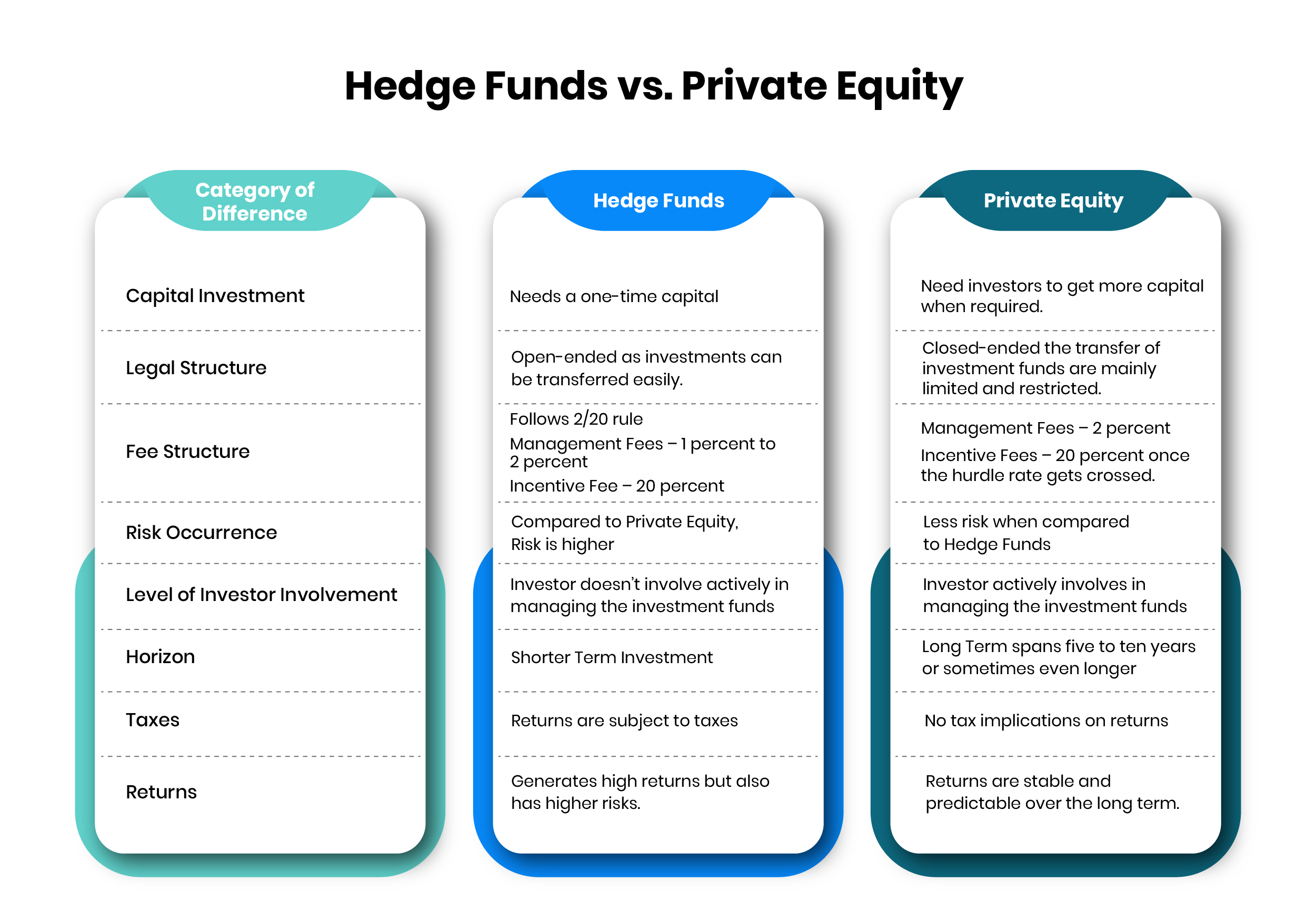
Key Differences Summarized
| Feature | Investment Management | Private Equity |
|—————–|—————————————————-|——————————————————|
| Target Assets | Publicly traded securities (stocks, bonds, etc.) | Privately held companies |
| Liquidity | High | Low |
| Time Horizon | Varies, can be short-term or long-term | Long-term (typically 10+ years) |
| Risk Profile | Generally lower | Generally higher |
| Return Potential | Moderate | Higher |
| Transparency | High | Lower |
| Control | Limited | Significant |
| Fees | Lower | Higher |
Conclusion
Both investment management and private equity offer distinct pathways to wealth creation. Investment management provides access to liquid public markets and a wide range of investment strategies, while private equity offers the potential for higher returns through investments in illiquid, privately held companies. The choice between the two depends on an investor’s individual circumstances, risk tolerance, investment goals, and time horizon. Investors seeking liquidity and diversification may find investment management more suitable, while those with a longer time horizon and a higher risk tolerance may consider private equity investments. Ultimately, understanding the nuances of each approach is crucial for making informed investment decisions and achieving long-term financial success.


:max_bytes(150000):strip_icc()/sweepaccount.asp-Final-e0b16e87c6be4879a9376eec7787c292.png?resize=200,135&ssl=1 "Lincoln Investment Sweep Program: An Overview")
:max_bytes(150000):strip_icc()/dotdash-what-are-major-differences-between-investment-banking-and-private-equity-Final-36b2c17dd9c447278b790d76f7c66b31.jpg?ssl=1&description=Investment%20Management%20Vs.%20Private%20Equity%3A%20A%20Comparative%20Overview)